


Beard Transplants: Why Men Get Them, How They Work & The Process at American Mane

A full beard doesn't come naturally to everyone. Genetics, patchy growth, scars, or naturally thin facial hair can make it difficult to achieve the beard or mustache you've always wanted.
That's where a beard transplant can help.
A beard transplant uses your own hair follicles to add hair to areas of the face where growth is thin or missing. Similar to a scalp hair transplant, follicles are typically taken from a donor area and carefully implanted into the beard or mustache according to a personalized design.
At American Mane in Aventura, we use FUE and DHI techniques for beard and mustache transplants. Here's why patients consider beard restoration and what you can expect from the process.

Why Do People Get Beard Transplants?
There isn't just one reason someone may want a beard transplant.
Some men naturally grow very little facial hair, while others have a beard that grows well in certain areas but remains patchy around the cheeks, jawline, sideburns, or mustache.
Others may want to improve the overall density, shape, or definition of their existing beard.
A beard transplant may also be considered when facial hair is missing in specific areas and a patient wants to create a more consistent appearance.
Ultimately, the goal isn't necessarily to create the biggest or thickest beard possible. The goal is to create facial hair that complements your features and looks natural.
How Does a Beard Transplant Work?
The concept is similar to a traditional hair transplant, but instead of placing the follicles into thinning areas of the scalp, they are transplanted into carefully selected areas of the face.
The scalp is commonly used as the donor source because it can provide suitable follicles for transplantation. With FUE, follicular units can be individually extracted from the donor area using a small punch.
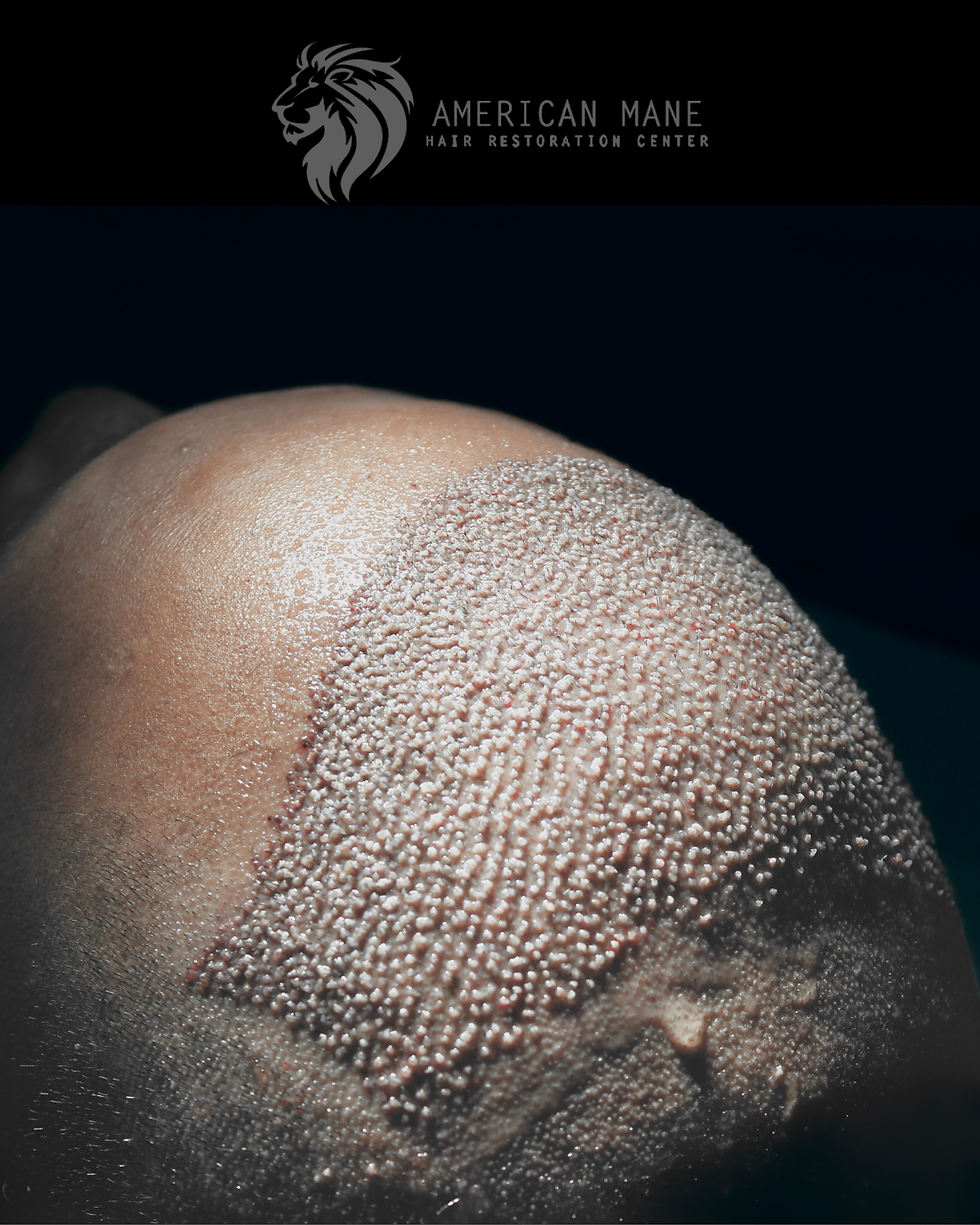
At American Mane, follicles for beard and mustache restoration are extracted from the scalp and can then be implanted into the designated facial areas using the DHI technique and an implanter pen.
The Beard Transplant Process at American Mane
Step 1: Consultation and Beard Design
Everything starts with an evaluation.
Our team considers your existing facial hair, the areas you would like to improve, your donor hair, and the beard shape you're hoping to achieve. The final design is important because beard restoration isn't simply about adding more hair. The placement needs to complement your facial structure and existing growth. Professional guidance from the International Society of Hair Restoration Surgery also emphasizes establishing the facial treatment design before beard transplant surgery.
Step 2: Extracting the Donor Hair
Once the treatment plan is established, follicles are taken from the donor area.
American Mane specializes in FUE hair restoration, where follicular units are extracted individually rather than removing a strip of scalp. For beard transplantation, the clinic states that follicles are extracted from the head before being prepared for implantation into the face.
Careful donor management is important because these follicles need to be selected and handled appropriately before transplantation.
Step 3: Creating the Beard
This is where planning and attention to detail become especially important.
Beard hair doesn't simply grow straight out of the face. Different areas naturally grow at different angles and directions. The mustache, cheeks, jawline, chin, and sideburns can each have their own growth patterns. The transplanted follicles therefore need to be positioned with the desired direction and distribution in mind. At American Mane, DHI implantation uses an implanter or Choi pen to place follicles directly into the recipient area.
The goal is for the transplanted hair to blend naturally with the facial hair you already have.
What Is Recovery Like?
Some redness and tenderness around the treated area can occur following a beard transplant. American Mane's current guidance notes that these effects are generally mild and may resolve within the following days. You'll receive instructions for caring for both the donor and transplanted areas. Following those instructions is important because the newly implanted follicles need time to settle and the skin needs time to heal.
Our clinic advises patients to avoid shaving or trimming the transplanted area and minimize direct sun exposure during the initial recovery period.
When Will You See Your New Beard?
A beard transplant isn't an instant transformation. Like a scalp hair transplant, the follicles go through a growth cycle after transplantation.
According to our current beard-transplant guidance, noticeable results may develop around six months, with fuller results expected around the one-year mark. Individual healing and growth timelines can vary. Patience is an important part of the process. The goal is for the transplanted follicles to gradually produce hair that can become part of your natural beard.
Is a Beard Transplant Right for You?
A beard transplant may be an option if you're struggling with patchy facial hair, naturally limited beard growth, or areas where you would like greater density or definition.
However, every face and donor area is different. A consultation is important to evaluate your existing facial hair, donor availability, goals, and whether transplantation is appropriate for you.
Ready to Grow the Beard You've Always Wanted?
If you've been filling in patchy areas every morning or have never been able to grow the beard you want, a personalized evaluation can help you understand what's possible with beard restoration.
🌐 Visit our website: https://www.americanmane.com
📅 Schedule your FREE consultation: https://shorturl.at/Qtkg6
American Mane offers FUE and DHI beard transplantation in Aventura, serving patients throughout Miami and South Florida.


Comments